
FAQs About Home Affordability
What percentage of your salary should go toward a mortgage?
The 28/36 rule is an easy mortgage affordability rule of thumb. According to the rule, you should spend no more than 28% of your pre-tax income on your mortgage payment and no more than 36% toward total debt obligations. Your mortgage, car payment, credit cards and student loans all count as debt.
| How Much Mortgage Can You Afford Based on Your Salary? | |||
|---|---|---|---|
| Annual Salary | Gross Monthly Income | Estimated Down Payment | Estimated Home Price You Can Afford |
| $60,000 | $5,000 | $9,000 | $141,857 |
| $70,000 | $5,833 | $10,500 | $176,499 |
| $80,000 | $6,666 | $12,000 | $188,736 |
| $90,000 | $7,500 | $13,500 | $220,557 |
| $100,000 | $8,333 | $15,000 | $277,680 |
| $200,000 | $16,666 | $30,000 | $601,106 |
| $300,000 | $25,000 | $45,000 | $971,179 |
| $400,000 | $33,333 | $60,000 | $1,316,851 |
| $500,000 | $41,666 | $75,000 | $1,662,523 |
|
Curious what you could qualify for? |
|||
How do lenders calculate home affordability?
Basic mortgage affordability factors include your monthly income, other debt obligations, and credit score. Your lender will compare the money coming in to the money going out and represent this as a figure called the debt-to-income ratio, or DTI.
Lenders want to ensure you have a steady income, helping you feel confident that your mortgage payment will remain manageable each month. The goal is to help you find a home that fits your budget so you can feel comfortable, not stretched too thin or stressed about payments down the road.
Ultimately, the process is designed to ensure you're at low risk for default while also giving you the purchasing power needed to make a competitive offer on a home you love.
What Factors Determine How Much Mortgage You Can Afford?
Your lender will consider your yearly income, monthly debts and obligations, credit history, cash reserves, employment history, and more when calculating your maximum loan amount. Getting prequalified feels great -- but it doesn't mean you should pull the trigger on a home at the top of your budget.
Within your prequalification amount, it's up to you to decide how much risk you want to assume. If you want to play it safe, stick to the 28/36 rule and ensure your monthly mortgage payment does not exceed 28% of your monthly gross income.
As you inch closer to your lending limit, your monthly budget could feel the squeeze after closing, leaving little extra for dining out and other leisure activities. If you do buy a home at the top of your budget, it's a good idea to consider job security, potential future earnings growth, and cash reserves as compensating factors that can offer extra peace of mind in the long term.
Curious what you could qualify for?
Get started with a First Residential loan expert today to get a personalized affordability estimate.
Start NowHow does your DTI impact affordability?
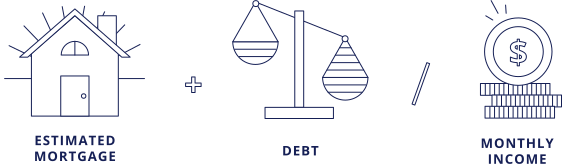
To figure out how much mortgage you can afford, your lender will compare the money coming in to the money going out and represent this as a figure called the debt-to-income ratio, or DTI.
Remember the mortgage rule of thumb-- no more than 36% of your gross monthly income should go toward debts, including a mortgage. And your mortgage shouldn't be more than 28% of your pre-tax earnings. If you have compensating factors, like excellent credit or large cash reserves, you may be able to swing a higher DTI.
How To Calculate Your DTI
Home affordability calculators use some basic information to determine your debt-to-income ratio:
- Your gross (pre-tax) monthly income
- Your other monthly debt payments
- The proposed monthly mortgage payment of a home, including taxes and insurance
Once you have the right information, calculating your DTI is simple. Just add your monthly expenses, and divide the total by your monthly income. You can see how this works in real time by using the calculator at the top of the article.
Let's take a look at a DTI calculation using an example:
Pre-tax monthly income:
$6,000
Monthly debt obligations:
Car payment
$300
Student loans
$150
Credit cards
$100
Total:
$550
Proposed mortgage payment:
Principle & interest
$1,000
Taxes
$300
Insurance
$200
Total:
$1,500
First, add the proposed mortgage payment to the existing debt obligations to find the total monthly debt obligation:
$1,500 + $550 = $2,050
Next, divide the total monthly debt obligation by the gross monthly income:
$2,050 / $6,000
Debt-to-income ratio: 34%
At 34%, DTI falls within the home affordability sweet spot according to the 28/36 rule of thumb.
Ready to take the next step? Speak with a First Residential loan expert who can guide you through your numbers and address any questions specific to your scenario.